


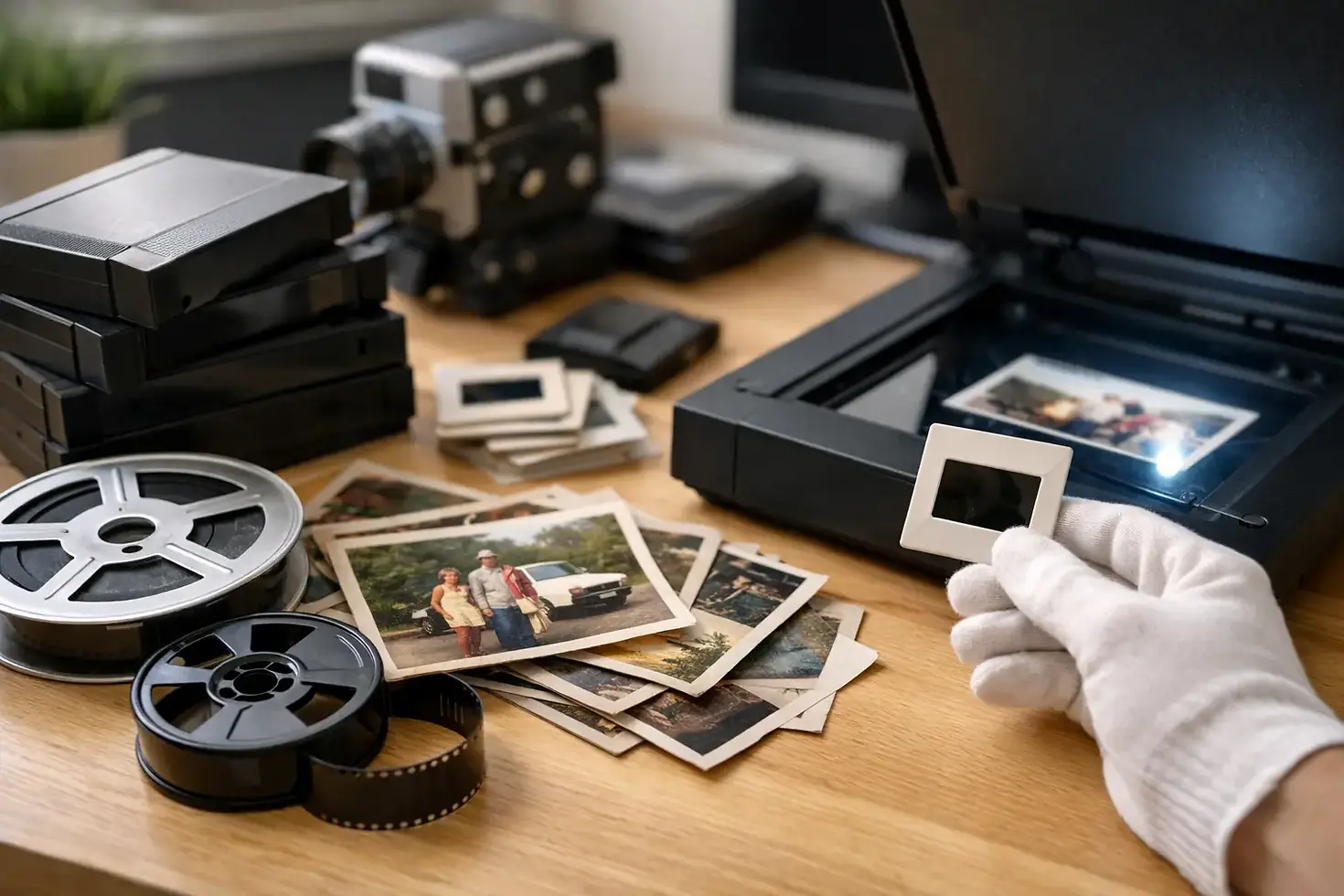
Estate Photo Archive Digitization With Care
A dining-room table covered in old albums, envelopes, loose snapshots, and yellowed newspaper clippings can hold a lifetime of stories - and a surprising amount of pressure. When you are settling an estate or caring for a loved one’s belongings, estate photo archive digitization gives those one-of-a-kind images a safer future without asking you to decide every detail all at once.
The goal is not to turn a family’s history into a pile of anonymous computer files. It is to preserve the faces, places, handwriting, and small moments that may matter even more years from now. A snapshot of a first home, a note tucked behind a wedding portrait, or a picture of relatives whose names have been forgotten can become a meaningful connection for children and grandchildren.
Why Estate Photo Archive Digitization Deserves Care
Estate photographs are rarely in perfect condition. They may have spent decades in a basement box, a hot attic, a damp garage, or an album with aging adhesive. Some are curled, faded, torn, or stuck together. Others are still beautiful but fragile enough that repeated handling could cause damage.
Digitizing the archive creates a working copy that family members can view, share, and enjoy without passing the originals around at every gathering. It also provides protection against loss from fire, water damage, accidental disposal, or further fading. Digital copies cannot replace the feeling of holding an original print, but they can reduce the need to handle it and make the memory available to more people.
There is also an emotional reason to take this work slowly. Estate collections often contain surprises: photographs from a military service, childhood pictures no one has seen in years, or images that answer long-standing family questions. Giving the collection thoughtful attention makes room for those discoveries instead of treating it as another task to clear from a room.
Start With Gentle Organization, Not Perfection
You do not need to identify every person or arrange every image by year before digitization begins. Trying to do that can stall the project for months. Start by keeping photos in their existing groups whenever possible. An envelope marked “Grandma’s side,” a box from a particular home, or an album arranged by one person may already contain useful context.
Set aside items that need special attention, such as severely damaged prints, framed photos, oversized portraits, negatives, slides, or pictures with writing on the back. The writing may be just as valuable as the image, so both sides should be considered for scanning. If photos are in an album and removal could tear them, leave them in place until a preservation professional can assess the safest approach.
Avoid using tape, glue, household cleaners, or heavy pressure to “fix” an old photograph. Even well-meant repairs can leave permanent marks. A soft, dry brush can remove loose surface dust, but fragile pieces are usually best left for careful manual cleaning and examination.
If several relatives are involved, ask each person for a small amount of information rather than asking one person to solve the whole history. A name, approximate decade, hometown, or event can be enough to make a digital folder far more useful later. When nobody knows the details, a simple label such as “Unidentified family photos, likely 1940s-1950s” is still better than no context at all.
Choose What to Preserve First
A large estate archive can feel overwhelming because every image seems equally important. In reality, priority depends on the family’s needs and the condition of the materials. Begin with photographs at greatest risk, including faded color prints, brittle paper, mold-affected items, and images that are already cracking or peeling.
Next, consider the pictures that are most likely to be requested for a near-term occasion. Families often want images for a memorial service, anniversary, reunion, wedding display, birthday celebration, or heritage video. Digitizing those first can bring comfort and create something meaningful while the larger archive is still being organized.
Albums deserve careful consideration. They preserve sequence, captions, and the way a loved one chose to tell a story. Scanning each page can retain that context, while individual photos can be scanned separately when they can be safely removed. There is no single right answer. A carefully arranged album may be more valuable as a complete object than as hundreds of isolated files.
A Safer Process for Family Heirlooms
Professional estate photo archive digitization should feel clear from the beginning. You should know how the photos will be handled, where they will be while in transit, what happens if an item is damaged, and how every original will be returned. These are not minor details when the materials are irreplaceable.
At DanCin Digital Photo, photos are individually handled, cleaned, and examined before high-resolution scanning. That human attention matters because estate collections are rarely uniform. One box may contain sturdy prints, delicate Polaroids, folded school portraits, and photographs with handwritten notes all mixed together. A one-size-fits-all bulk process may be fast, but it does not always give fragile family materials the attention they deserve.
For local families near Ozark, Missouri, pickup and delivery can remove the worry of packing a treasured collection for shipment. For families farther away, tracked shipping and clear packing guidance help create a more secure path from your home to the digitization process and back again. Originals should be returned after the work is complete, along with the digital files on the delivery format you choose.
Before sending anything, take a few phone pictures of the boxes and albums as they are packed. Make a simple inventory of the major groups, such as “three blue albums,” “box of loose prints,” or “envelope of military photos.” This is not about creating more paperwork. It gives you peace of mind and helps everyone confirm that the collection remains complete.
Make Digital Files Easy for the Family to Use
A successful project does more than create scans. It gives your family a practical way to find and enjoy them. Clear folder names are often enough: “Dad’s Childhood,” “Smith Family Reunions,” “Grandparents’ Wedding,” or “Unknown Photos to Identify.” If dates are uncertain, use broad ranges rather than guessing.
Consider making two versions of the collection. One can be a preservation set containing full-resolution scans, while another can be organized for easy viewing and sharing. The preservation files protect detail for future printing or restoration. The everyday set lets family members browse memories without worrying about changing or misplacing the master copies.
This is also a good time to preserve more than photographs. A box of pictures may sit beside 8mm reels, VHS tapes, cassette recordings, slides, or vinyl records from the same period. When those items tell the same family story, converting them together can create a fuller record. Hearing a grandfather’s voice or watching an old home movie often brings still photographs to life in a way words cannot.
When Restoration Helps - and When It Should Be Light
Photo restoration can repair tears, scratches, stains, fading, and other visible damage. It can make a cherished portrait suitable for display or help a hard-to-see face become recognizable again. Still, restoration works best when it respects the original rather than making the image look artificially new.
The right level of repair depends on how the photo will be used. A portrait being enlarged for a memorial display may need more detailed work than a small snapshot being saved for family reference. In some cases, preserving the original character of an old image, including its gentle signs of age, is part of its honesty and charm.
Ask for a preview or discuss the intended use before extensive edits begin. That keeps expectations clear and helps ensure the finished image feels like your family’s photograph, not someone else’s interpretation of it.
Give the Collection a Future Beyond Storage
Once the files are ready, share them while the stories are still close. Bring a USB drive to a family gathering. Invite relatives to identify unknown faces. Use selected photos in a slideshow, a printed keepsake, or a heritage-storytelling video with music and recorded memories. The best archive is not one that disappears into a drawer again. It is one that invites conversation.
You may never learn the name behind every photograph, and that is okay. Saving the image now gives someone in the future the chance to recognize it, add a name, or see a piece of themselves in a family story they had not yet heard.


Comments